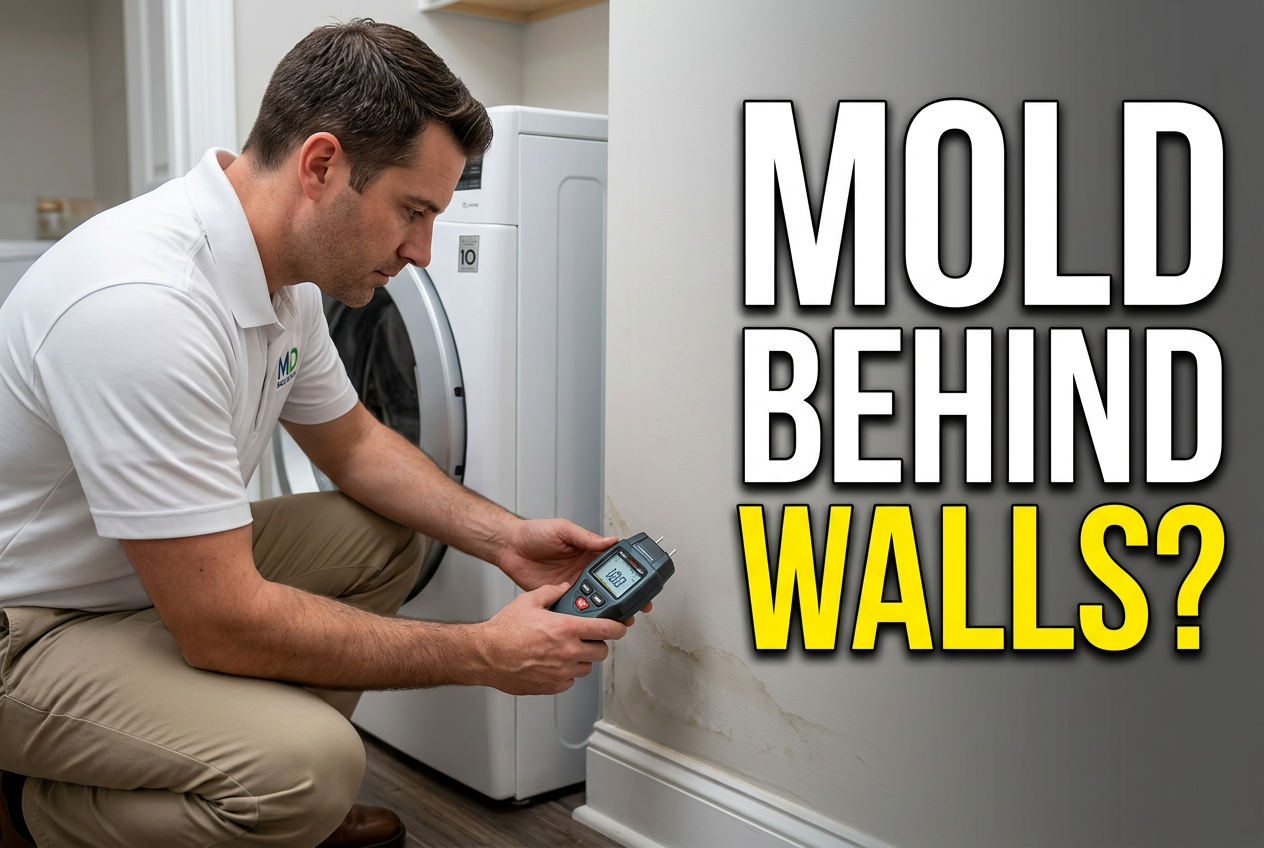
A washing machine leak in a Cabin John rental can leave more than a wet floor. Water may seep beneath flooring, behind baseboards, or into nearby walls, where damp materials can take longer to dry. Whether mold testing after a washing machine leak in Cabin John, MD is worth considering depends on factors such as how much water escaped, how long materials stayed damp, and whether there are signs of moisture that remain after cleanup.
What a washing machine leak can mean for a rental
The visible puddle may not show the full extent of the water. Depending on the leak’s location and duration, water can move under flooring, into an adjacent room, or behind a cabinet or baseboard. Porous materials such as carpet padding, drywall, and insulation may hold moisture after the surface looks dry.
The source matters, too. A small leak noticed quickly may affect only a limited area. A leak that went unnoticed, spread beyond the laundry space, or involved a drain overflow may call for a closer assessment. The priority is to stop the water source and address wet materials promptly—not to assume that mold is present.
In a rental, notify the landlord or property manager as soon as possible and follow the property’s maintenance process. Share the time you noticed the leak, where water traveled, and any steps taken to contain it. Photos can help document the affected areas and how they change as drying continues.
First steps after the leak
- Stop the water if it is safe to do so. Turn off the washer and, if accessible, its water supply. Contact the property manager about repairs or other help needed to stop the leak.
- Keep people away from electrical hazards. Do not step into standing water near electrical outlets or appliances. If you are unsure whether an area is safe, ask a qualified professional for guidance.
- Document the affected area. Take photos and note which rooms, floors, walls, or belongings were exposed. Keep a record of when the leak was found and reported.
- Support drying without disturbing materials. If the area is safe, remove small amounts of standing water and increase airflow where appropriate. Wet carpet, flooring, or wall materials may need professional assessment, especially if water has reached concealed spaces.
- Check for moisture over time. A surface that feels dry does not necessarily mean materials below it are dry. Follow up with the property manager if dampness continues or the affected area grows.
The U.S. Environmental Protection Agency advises drying wet materials within 24 to 48 hours when possible to help reduce the chance of mold growth. Its guidance on mold cleanup and moisture also explains that the moisture source needs to be addressed. The appropriate response depends on the materials involved and the extent of the water damage.
Warning signs that deserve follow-up
After a washer leak, pay attention to changes in the affected room and nearby spaces. Signs that may justify further investigation include:
- Flooring, carpet, baseboards, or drywall that remains damp, feels soft, or appears swollen
- Water staining or bubbling paint that develops or expands after the leak
- A persistent musty odor in or near the area, especially after visible water has been removed
- Visible growth on a surface or recurring moisture in the same location
- Water that appears to have traveled under flooring, into a wall cavity, or into an adjoining room
These observations can point to a moisture problem, but appearance and odor alone do not confirm mold or identify what is behind a surface. Avoid cutting into walls or pulling up flooring just to investigate; coordinate with the property manager and seek qualified guidance about the next step.
Inspection, moisture investigation, and mold testing are different
A visual inspection looks at accessible areas for visible conditions that may be relevant, such as staining, damaged materials, or visible growth. It does not reveal every concealed condition.
A moisture investigation focuses on whether materials are wet and where moisture may be present. Depending on the situation, an inspector may use appropriate tools to check accessible surfaces and evaluate areas near the leak. This can help determine whether further investigation is warranted, but it is not the same as laboratory mold analysis.
Mold testing generally involves collecting samples for analysis. It may be worth discussing when there is a specific question that sampling could help address—for example, when an inspection identifies a concern that cannot be resolved through visual observations alone. Testing may also be considered when the extent of a suspected issue is unclear or when documentation is needed for a property decision.
Testing is not automatically necessary after every leak, and a sample is only information about the conditions where and when it was collected. It cannot by itself show the full extent of a problem or prove that a property is free of mold. A professional can explain what a proposed test can and cannot answer before samples are taken.
When mold testing after a washing machine leak in Cabin John, MD may be worthwhile
Consider requesting a professional opinion if the leak affected more than a small, quickly dried area, if building materials stayed damp, or if moisture may have traveled into a floor or wall cavity. An inspection may be a useful first step when you are unsure whether testing is appropriate. If a musty smell or visible growth persists after the leak has been addressed, or moisture keeps returning, further assessment may also make sense.
For a small leak that was promptly stopped and thoroughly dried, with no signs of continuing moisture or visible damage, mold testing may not add useful information. In that case, monitoring the area and keeping the property manager informed may be reasonable. The decision should reflect the actual conditions rather than the fact that a leak occurred alone.
What to expect from a professional assessment
A mold inspection or testing appointment may include questions about when the leak occurred, where water traveled, and what drying or repairs have already taken place. The professional may examine accessible areas and discuss whether moisture investigation or sampling is appropriate. Ask what areas will be evaluated, what the proposed testing is intended to answer, and how findings will be reported.
MD Mold Testing offers mold testing and mold inspection. To learn more about the company, visit its MD Mold Testing directory listing or the MD Mold Testing website. An assessment can help you understand whether testing fits the conditions in your rental; it does not replace stopping the leak or drying affected materials.
Frequently Asked Questions
Should I request mold testing after any washing machine leak?
No. Testing is not necessary for every leak. Consider the amount of water, how long materials were wet, whether moisture may be concealed, and whether signs remain after drying.
Can a musty smell confirm that mold is present?
No. An odor can be a reason to investigate, but it does not confirm mold or show where a moisture problem is located. A professional assessment can help clarify what steps may be appropriate.
Should I wait for mold testing before drying the area?
No. Addressing the leak and drying wet materials should not be delayed while deciding whether to test. Tell the property manager about the damage and seek prompt help if materials remain wet or the affected area is extensive.
Can testing prove that the rental has no mold?
No single test can establish that an entire property is mold-free. Sampling provides information about the locations and conditions tested and should be interpreted alongside the property’s moisture history and inspection findings.
Need Mold Testing After a Washer Leak in Cabin John?
MD Mold Testing offers mold testing and mold inspection to help you assess whether further evaluation may be useful after a washing machine leak.
MD Mold Testing
Call: (301) 717-1454



Leave a Reply