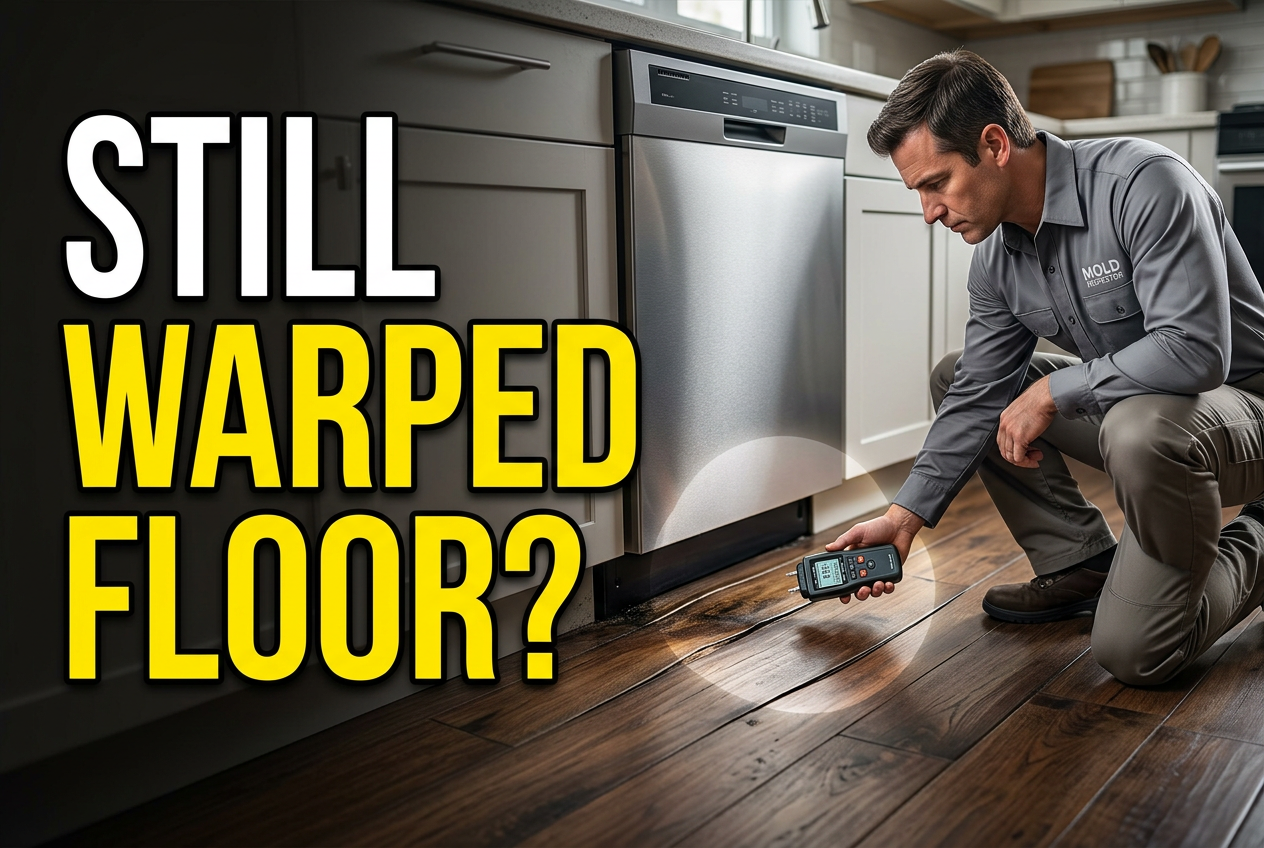
A dishwasher leak can be repaired, yet the kitchen floor may still look raised, uneven, or discolored. For homeowners in Pembroke Pines, that change does not automatically mean mold is present. Flooring can remain warped after materials absorb water, and the cause may be damaged flooring, a wet underlayment, or moisture that has not fully dried. The practical next step is to understand what the visible change can—and cannot—tell you, and whether further moisture assessment or a mold inspection is appropriate.
Key Takeaways
- A repaired leak does not confirm that every affected material has dried.
- Warping can result from water-damaged flooring or underlayment, but it does not prove mold is present.
- Persistent dampness, musty odors, or new staining may justify a closer moisture assessment.
- A mold inspection can assess accessible conditions; testing is only one tool and has limits.
Why a floor may still look warped after the leak is fixed
When water escapes from a dishwasher, it can reach beyond the visible surface. Depending on the floor construction and how much water was released, moisture may affect seams, flooring adhesive, the underlayment, or materials around the cabinet and toe-kick. Some flooring products swell, cup, or lift after getting wet. Even after the appliance or supply line is repaired, that physical change may remain until damaged material is evaluated or replaced.
South Florida’s warm, humid conditions can also make drying more challenging, especially in a kitchen with limited airflow or enclosed spaces beneath cabinets. However, humidity alone does not establish that hidden materials are wet or that mold has developed. The key questions are whether moisture remains, which materials were affected, and whether there are signs of microbial growth or an ongoing source of water.
Signs worth checking around the dishwasher
Without pulling up flooring or opening walls, you can look for changes in the areas that were exposed to the leak. Note whether the floor feels soft or spongy, whether boards or tiles have lifted, or whether the affected area seems to be growing. Check for new discoloration, bubbling, cracked grout, or dampness at the cabinet base. A persistent musty odor may also be a reason to investigate, though odors have multiple possible causes and are not proof of mold.
Pay attention to whether the floor changes after the dishwasher runs, or whether moisture appears near the sink, refrigerator, or nearby plumbing. If the area becomes wet again, stop using the appliance if appropriate and contact a qualified appliance or plumbing professional to identify the source. If water is near electrical components, avoid contact and seek qualified help.
Keep a simple record of when the leak was repaired, what materials were affected, and any changes you observe. Photos can help document whether staining or warping is spreading. Avoid covering a damp area with rugs or placing furniture over it, since that can make changes harder to notice and may slow drying.
Reasonable next steps for a Pembroke Pines homeowner
- Confirm the source was corrected. If the repair addressed only the visible water, ask the appropriate professional whether the dishwasher, hose, valve, and nearby connections were checked for continued leakage.
- Review the affected area. Look at flooring edges, cabinet bases, and accessible areas near the appliance. Do not remove flooring or cut into walls unless you are qualified and have considered safety and repair implications.
- Ask about drying and damaged materials. A flooring professional or water-damage specialist may help determine whether the surface or underlying materials need attention. Mold inspection and remediation are different services; an inspector can assess conditions but does not perform repairs unless separately qualified and engaged for that work.
- Consider an independent inspection if concerns persist. If there is an ongoing musty odor, visible suspected growth, recurring dampness, or uncertainty about the extent of the affected area, a professional assessment may help clarify what to do next.
Do not rely on appearance alone to decide that everything is dry—or that mold is present. A floor can remain distorted after moisture has gone, while concealed moisture may not be visible from above. The right evaluation depends on the building materials, leak history, and current conditions.
When a mold inspection may help
A mold inspection in Pembroke Pines, FL may be useful when the leak has been repaired but warning signs remain, when the affected area may extend under cabinets or flooring, or when a homeowner wants an independent assessment before planning further work. An inspection can include a visual review of accessible areas, questions about the water event, and moisture measurements where appropriate. Thermal imaging may help identify temperature patterns that warrant closer evaluation, but it does not directly detect mold or confirm moisture by itself. Findings should be interpreted alongside other observations and measurements.
Mold testing may also be considered when there is a specific question that sampling could help address. A professional should explain the purpose and limits of any proposed sampling before it is done. Results represent the locations and conditions sampled at that time; they do not map every hidden area or guarantee that a property is free of mold. Testing is not always necessary for every water leak or floor concern.
MoldXperts is an independent mold inspection and testing company serving Broward, Miami-Dade, and Palm Beach counties, including Pembroke Pines. The company offers mold inspection, mold testing, indoor air quality testing, and thermal imaging as part of mold and moisture inspections. It does not provide mold remediation or mold removal services. An independent assessment can help a property owner get an evaluation from a company that is not also selling remediation work.
What an inspection can—and cannot—establish
An inspection can document observable conditions, identify areas that may warrant additional attention, and help determine whether testing is appropriate. It may provide useful information for deciding whether to consult a flooring, plumbing, or other qualified contractor. The inspector’s conclusions are based on accessible areas and the tools and methods used during the assessment.
An inspection cannot necessarily see through every finished surface or determine the full condition of concealed materials without further access. A moisture reading or thermal image is not, by itself, proof of mold. Likewise, a sample result is not a guarantee about the entire home. If materials need to be opened or replaced, discuss that scope with the appropriate qualified professional and follow applicable safety guidance.
Watch: MoldXperts on YouTube
For more information about mold inspection and testing, visit the official MoldXperts YouTube channel.
Arrange an independent assessment in Pembroke Pines
If your dishwasher leak has been repaired but the kitchen floor remains warped, damp, or musty, an independent assessment may help you understand what conditions are present and what questions to ask next. Contact MoldXperts to discuss mold inspection or testing in Pembroke Pines and throughout Broward, Miami-Dade, and Palm Beach counties. Call (954) 464-4538 or visit moldxperts.com.



Leave a Reply