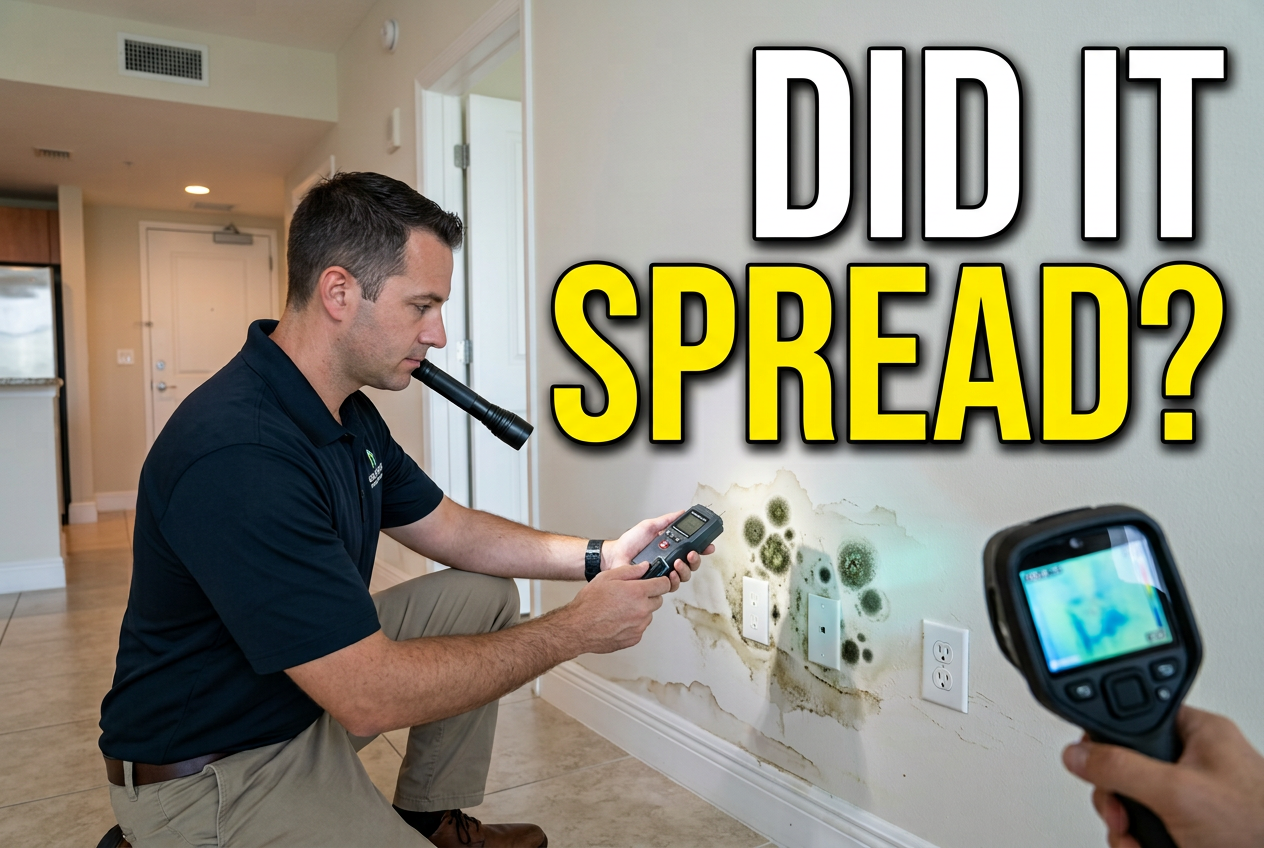
A leak in the condo next door or upstairs can affect more than the unit where the plumbing problem began. Water may travel through ceilings, walls, floors, or shared building spaces before it becomes visible. If your Pompano Beach condo has developed a musty odor, staining, damp materials, or other signs of moisture after a neighboring leak, you may be wondering whether to arrange an inspection—and what that inspection can actually tell you.
Key Takeaways
- Water can move between condo units through concealed building materials, so the source unit may not be the only area affected.
- Document visible changes and report the leak promptly to your condo association or property manager.
- An independent inspection may help assess moisture conditions and identify areas that deserve further attention.
- Mold testing is not always necessary, and a test cannot by itself establish the full extent or cause of a moisture problem.
Why a neighboring condo leak can affect your unit
In a multi-unit building, plumbing lines, ceilings, walls, and floor assemblies may connect or sit close together. A leak can move along these pathways and show up some distance from its source. For example, water from an upstairs bathroom could leave a stain on a ceiling below, while moisture from a shared wall or pipe chase may affect a different room.
The extent of any impact depends on factors such as how much water escaped, how long it went unnoticed, the materials involved, and how quickly the area was dried. A reported leak does not automatically mean your unit has mold. But if materials became wet and remained damp, an assessment may help clarify whether moisture is still present or whether further evaluation is appropriate.
Signs to watch for after the leak
Pay attention to changes in your unit, especially near shared walls, ceilings, plumbing areas, and the floor below the reported leak. Relevant signs can include:
- New or spreading ceiling or wall stains, bubbling paint, or peeling finishes
- Warped baseboards, flooring, cabinets, or other materials
- A persistent musty or earthy odor that was not present before
- Visible spots or growth on surfaces
- Materials that feel damp, or recurring condensation in the affected area
These clues can have more than one explanation, and appearance alone cannot confirm what is behind a wall or ceiling. If water is actively entering, there is a safety concern, or electrical equipment may be wet, contact building management and the appropriate qualified professionals promptly. Avoid opening building materials yourself, particularly if you do not know what is behind them or how the building manages shared components.
What to do before arranging an inspection
Start by notifying your condo association, property manager, or building maintenance contact. Ask whether the leak source has been identified, when it was stopped, and what drying or repair steps have taken place in the affected areas. Responsibility for repairs and access to shared or neighboring spaces depends on the building’s documents and circumstances, so keep communication factual and follow the association’s process.
Take dated photos of visible changes and make a brief record of when you first noticed them, where they appeared, and whether they changed over time. Keep relevant messages, work orders, and leak notices. Do not conceal or paint over a stain before it has been documented and assessed. If you rent, notify your landlord or property manager as well.
If the area is accessible and safe, note whether it feels damp or whether the odor persists. Do not rely on a consumer moisture meter or a single home test as a definitive diagnosis. Those tools can provide limited information, and conditions inside building assemblies may require professional evaluation.
When to arrange an independent mold inspection in Pompano Beach, FL
Consider contacting an independent inspector when there is a persistent musty odor, visible suspected growth, recurring moisture, unexplained staining, or a history of water intrusion that was not fully assessed. An inspection may also be useful when the leak has reportedly been repaired but you want an assessment of your own unit before deciding on next steps.
Timing matters, but there is no single waiting period that fits every leak. If materials are still wet or water is continuing to enter, prompt attention to the leak and drying is more urgent than waiting for a mold test. If the water event is over but signs remain, an inspector can discuss whether an assessment now is useful and whether sampling is warranted. For a real estate transaction, insurance matter, or building dispute, ask relevant professionals about documentation and procedures that apply to your situation.
Choosing an independent mold inspection company means the inspection and testing provider is not also selling mold remediation work. This can help property owners obtain an assessment separate from any remediation proposal. It does not mean every company that offers both services has a conflict; the important point is to understand what services are being provided and what the findings do—and do not—establish.
What an inspector may evaluate
Depending on the scope and access available, a mold inspector may review the areas you identify, look for visible signs of moisture or suspected mold, and use moisture-measuring equipment to assess accessible materials. Thermal imaging may be used as part of a mold and moisture inspection to identify temperature patterns that could merit further investigation. It does not see mold or prove that a wall is wet, so results need to be interpreted alongside other observations and measurements.
The inspector may also discuss whether air or surface sampling is appropriate. Sampling is not required in every situation. If performed, it provides information about the samples collected under the conditions present at that time. Results do not necessarily identify the source of moisture, reveal every concealed area, or predict future conditions. Ask what areas will be evaluated, what limitations apply, and how findings will be reported before testing begins.
Access can be a challenge in a condominium. An inspector may be limited to your unit unless the association or neighboring owner authorizes entry into other spaces. A report should explain any areas that could not be accessed and avoid treating an inaccessible area as if it had been inspected.
What an inspection can and cannot establish
An inspection can document observed conditions and help identify areas where moisture or suspected mold may require attention. Testing, when appropriate, can provide sample results for the locations and time tested. Neither an inspection nor a lab result alone can establish every detail about the leak, determine responsibility for repairs, guarantee that no hidden issue exists, or replace the work of a plumber, building professional, or other specialist.
MoldXperts provides independent mold inspection and testing, indoor air quality testing, and thermal imaging as part of mold and moisture inspections. The company does not provide mold remediation or mold removal. If the assessment indicates that repair or remediation may be needed, you can discuss next steps with the appropriate building professionals.
Watch: MoldXperts on YouTube
Explore the MoldXperts YouTube channel for more information about mold inspection and testing.
Arrange an independent assessment in Pompano Beach
If a leak in a neighboring condo has left you with a lingering odor, visible changes, or questions about moisture in your unit, MoldXperts can discuss independent inspection and testing options in Pompano Beach. MoldXperts serves Broward, Miami-Dade, and Palm Beach counties. Call (954) 464-4538 or visit the website to ask about an assessment.





Leave a Reply