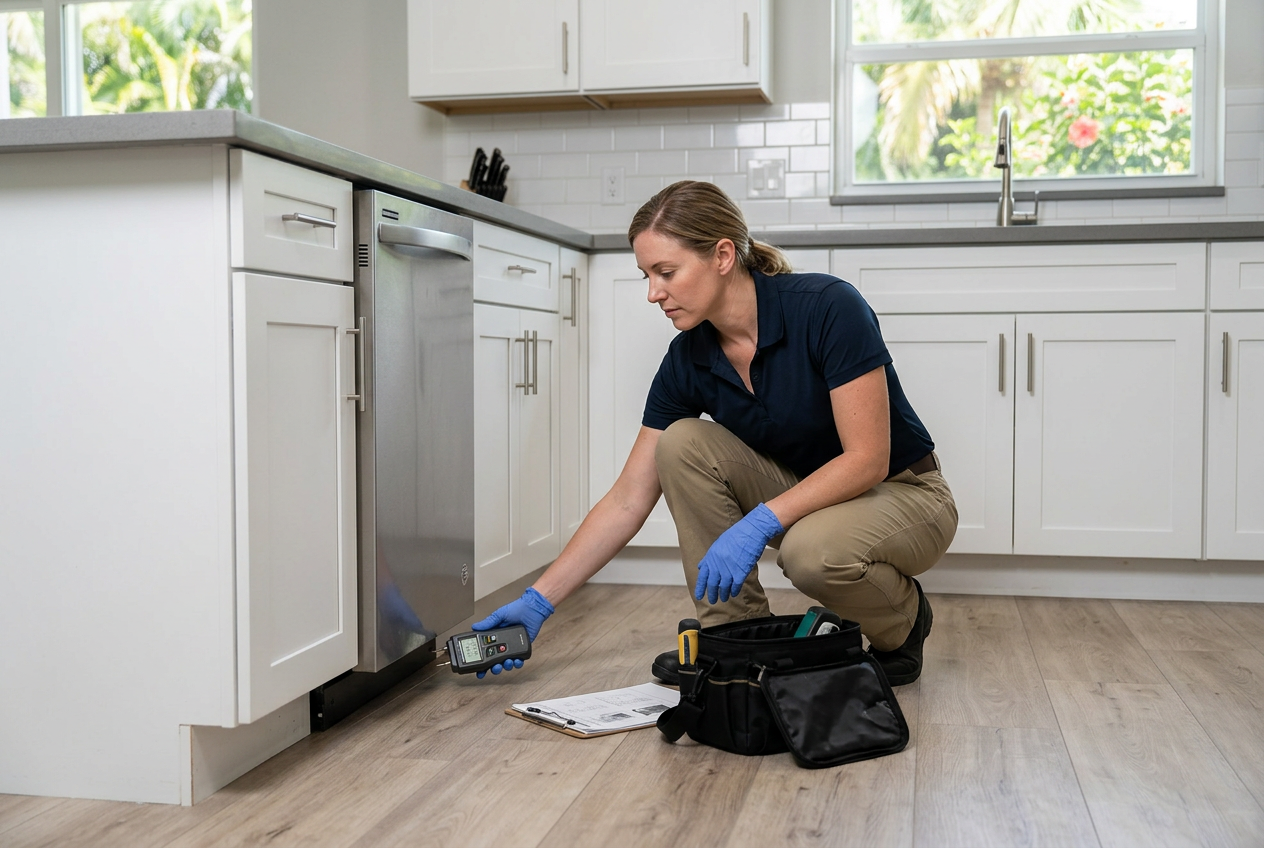
A dishwasher leak can leave more than a wet cabinet or puddle on the kitchen floor. Water may travel beneath flooring, into seams, or toward the subfloor before it is visible. In Coral Springs, where warm, humid conditions can make damp materials slow to dry, it may be difficult to tell whether a leak caused a lasting moisture problem just by looking at the surface.
A mold inspection Coral Springs FL homeowners arrange after a dishwasher leak can help assess accessible areas, look for signs of moisture, and determine whether mold testing may be useful. An inspection cannot automatically reveal every hidden condition beneath an intact floor, but it can provide information to guide reasonable next steps.
Key Takeaways
- Water can spread below flooring or cabinets even when the visible spill seems small.
- Drying the area and addressing the leak promptly can help limit continued moisture, but does not confirm that concealed materials are dry.
- Moisture measurements, visual inspection, and thermal imaging may help identify areas that deserve closer evaluation.
- Mold testing is not always necessary; an inspector can discuss whether it fits the conditions and questions at the property.
- An inspection may identify concerns, but confirming what is beneath flooring can require access to concealed materials.
Why a dishwasher leak can affect flooring beneath the surface
Dishwasher leaks may come from a supply connection, drain hose, door seal, or the appliance itself. Depending on where the water escapes, it can run beneath the dishwasher, along cabinet edges, or into joints between flooring sections. Some flooring materials resist surface water better than others, but water can still enter at edges, seams, transitions, or openings around plumbing.
What happens next depends on factors such as the amount of water, how long the leak continued, the flooring and subfloor materials, and how quickly the area was dried. A small leak that is stopped and dried promptly may not result in mold growth. However, a slow or recurring leak can keep concealed materials damp without producing an obvious puddle.
Moisture alone is not proof of mold, and a musty smell or visible discoloration does not by itself identify the source or extent of a problem. These observations are reasons to investigate in context rather than assume a particular outcome.
Signs worth paying attention to after a leak
After the appliance leak has been stopped, note changes around the dishwasher, nearby cabinets, and the flooring. Possible clues include:
- Flooring that feels soft, swollen, lifted, or uneven
- Discoloration, staining, or changes in finish near the appliance
- Cabinet bases or trim that appear swollen or damaged
- A persistent musty odor, especially when the kitchen is closed up
- Water that reappears or dampness that does not seem to improve
- Visible growth on accessible surfaces
These signs can have causes other than mold. For example, a flooring change may reflect water damage without microbial growth, while an odor can have more than one source. If the leak is ongoing, the floor is deteriorating, or water may have reached electrical components, contact the appropriate qualified professional promptly.
Reasonable first steps for homeowners
Stop using the dishwasher until the leak source has been identified and addressed. If it is safe to do so, shut off the appliance’s water supply and remove standing water from accessible surfaces. Follow the flooring or appliance manufacturer’s guidance where available, and avoid using heat or equipment in a way that could create a safety risk.
Keep a simple record of when the leak occurred, where water was visible, and what was done to dry the area. Photos can help document changes over time. Avoid pulling up flooring or cutting into cabinets solely to look for mold; disturbing concealed materials may complicate an assessment and could damage the finish. A plumber or other qualified building professional may be needed to address the leak or evaluate damaged materials. Mold inspection and testing are separate from plumbing repairs and remediation.
What a mold inspection may evaluate
An independent mold inspector can assess accessible areas around the dishwasher and look for visible signs of moisture impact or suspected mold. The inspector may take moisture readings in appropriate materials and compare readings across nearby areas. Thermal imaging, when used as part of a mold and moisture inspection, can help identify temperature patterns that may warrant further investigation.
Thermal imaging does not see through flooring or confirm mold. A temperature difference can have several explanations, so the image should be considered alongside other observations and measurements. Similarly, a moisture meter provides information about the material and location being checked; it does not establish that mold is present.
The inspector may discuss whether sampling is appropriate based on the inspection findings and the property owner’s questions. Mold testing can provide information about samples collected at specific locations and times, but it is not a complete map of every concealed area. A negative sample cannot guarantee that no mold exists elsewhere, and a result should be interpreted alongside the inspection conditions and the sampling plan.
What an inspection can—and cannot—establish
A non-invasive inspection can help identify accessible concerns and areas that may need additional evaluation. It may also help clarify whether the evidence points to a moisture issue, whether sampling could answer a specific question, or whether opening an area should be discussed with an appropriate contractor or property professional.
When flooring remains intact, an inspector generally cannot confirm the condition of every layer beneath it without access. If the inspection suggests concealed damage, the next step may involve a qualified professional evaluating whether selective opening or repair is appropriate. The need for that work depends on the findings; it should not be assumed solely because a dishwasher leaked.
Testing also does not determine the cause of a leak, fix the appliance, or remove mold. MoldXperts is an independent mold inspection and testing company and does not provide mold remediation or mold removal services. Independent assessment can be useful for property owners seeking an inspection from a company that is not also selling remediation work.
When to consider a professional inspection in Coral Springs
Consider arranging an inspection if the leak lasted for an uncertain period, moisture may have entered flooring or cabinetry, signs persist after drying, or you need an independent assessment to inform a property decision. A professional inspection may also be helpful when the source of a musty odor is unclear or when you want guidance on whether mold testing is appropriate.
MoldXperts provides mold inspection, mold testing, indoor air quality testing, and thermal imaging as part of mold and moisture inspections in South Florida, including Broward County and Coral Springs. The scope of an assessment depends on the conditions found and the areas that are accessible.
Watch: MoldXperts on YouTube
For more information, visit the official MoldXperts YouTube channel. No specific video is embedded here because a verified video relevant to dishwasher leaks and concealed kitchen-floor moisture has not been identified.
Arrange an independent mold inspection
If a dishwasher leak has left you concerned about moisture beneath your Coral Springs kitchen flooring, contact MoldXperts to discuss a professional mold inspection or testing options. Call (954) 464-4538 or visit MoldXperts. MoldXperts provides independent mold inspection and testing services in Broward, Miami-Dade, and Palm Beach counties.




Leave a Reply