A condo’s history of plumbing leaks does not automatically mean there is a mold problem. But before buying in Delray Beach, it is sensible to understand what leaked, where moisture traveled, how repairs were handled, and whether the affected areas are now dry. Water can move behind cabinets, under flooring, into wall cavities, or between units, so a clean-looking surface may not tell the whole story.
An independent mold inspection in Delray Beach, FL may be worth considering when a leak was significant, its source or extent is unclear, repairs were not well documented, or there are current signs of moisture or possible mold growth. An inspection is not a guarantee that a property is free of mold, and it cannot replace a review of the condo’s records. It can, however, provide additional information about visible conditions and areas of concern before you make a decision.
Why a condo’s leak history deserves a closer look
Plumbing leaks can affect more than the spot where water first appears. A slow leak beneath a sink, behind a washing machine, or inside a wall may go unnoticed for some time. A supply-line failure or leak from an upstairs unit can wet ceilings, flooring, insulation, and shared building components. Even after the source is repaired, materials that stayed damp may need appropriate drying or replacement.
In South Florida, warm temperatures and humidity can make moisture management especially important. That does not mean mold will necessarily develop after every leak; the outcome depends on factors such as how much water entered, how long materials remained wet, the materials involved, and how quickly the area was dried. A buyer should seek specific information rather than assume either that the issue is resolved or that mold is present.
Start with records and questions
Before arranging additional testing, ask the seller and, where appropriate, the condominium association or property manager for available information about the leak. Useful records may include the reported date and source, the units or common areas affected, plumbing repair invoices, water-damage or drying documentation, and any follow-up inspection or testing reports. Ask whether the leak recurred and whether repairs involved opening walls, removing flooring, or replacing other materials.
Also clarify what “repaired” means. Fixing a pipe addresses the source, but it does not by itself establish that every affected material was dried or that concealed areas are free of damage. If the leak involved another unit or a common element, find out what areas were inspected and who handled the work. Condo responsibilities and access arrangements vary, so buyers may need to coordinate questions through the appropriate parties.
- Where did the water originate, and when was it discovered?
- Which rooms, surfaces, or neighboring units were affected?
- Was the source repaired, and is there documentation?
- Were wet materials dried, removed, or replaced?
- Have there been recurring leaks, musty odors, or visible staining?
- Can an inspector access the areas where the leak occurred?
Warning signs to note during a walkthrough
Look for water stains, bubbling or peeling paint, swollen trim, warped flooring, discoloration, or recently patched areas near plumbing fixtures and along ceilings or walls below bathrooms. A persistent musty odor can also be a reason to ask more questions, particularly if it is strongest inside a cabinet or near a past leak. These clues are not proof of mold: stains may be old, and odors can have other causes. Their value is that they help identify locations for follow-up.
Pay attention to areas around sinks, toilets, tubs, laundry connections, air-conditioning equipment, and windows, as well as ceilings beneath an upstairs bathroom. Do not dismiss a concern simply because a surface looks freshly painted. At the same time, cosmetic repairs are not evidence by themselves that a problem was concealed. Ask for the repair history and consider an inspection if the available information does not resolve your concern.
When an independent mold inspection may make sense
Consider an independent inspection when the leak was substantial or prolonged, when the affected area is not accessible during a standard walkthrough, or when records do not explain how water-damaged materials were handled. It may also be useful if there is visible suspected growth, a continuing musty smell, a recurring moisture reading, or uncertainty about whether a previously affected area is dry. If the leak is active, reporting and repairing the source should take priority; mold sampling alone does not fix a plumbing or moisture problem.
Independence can be helpful because MoldXperts focuses on mold inspection and testing rather than selling mold remediation or removal. That allows the inspection and testing to be considered separately from any later repair or remediation decisions. It does not mean every business that offers both inspection and remediation has a conflict; buyers should understand the scope of any provider’s services and recommendations.
What an inspector may evaluate
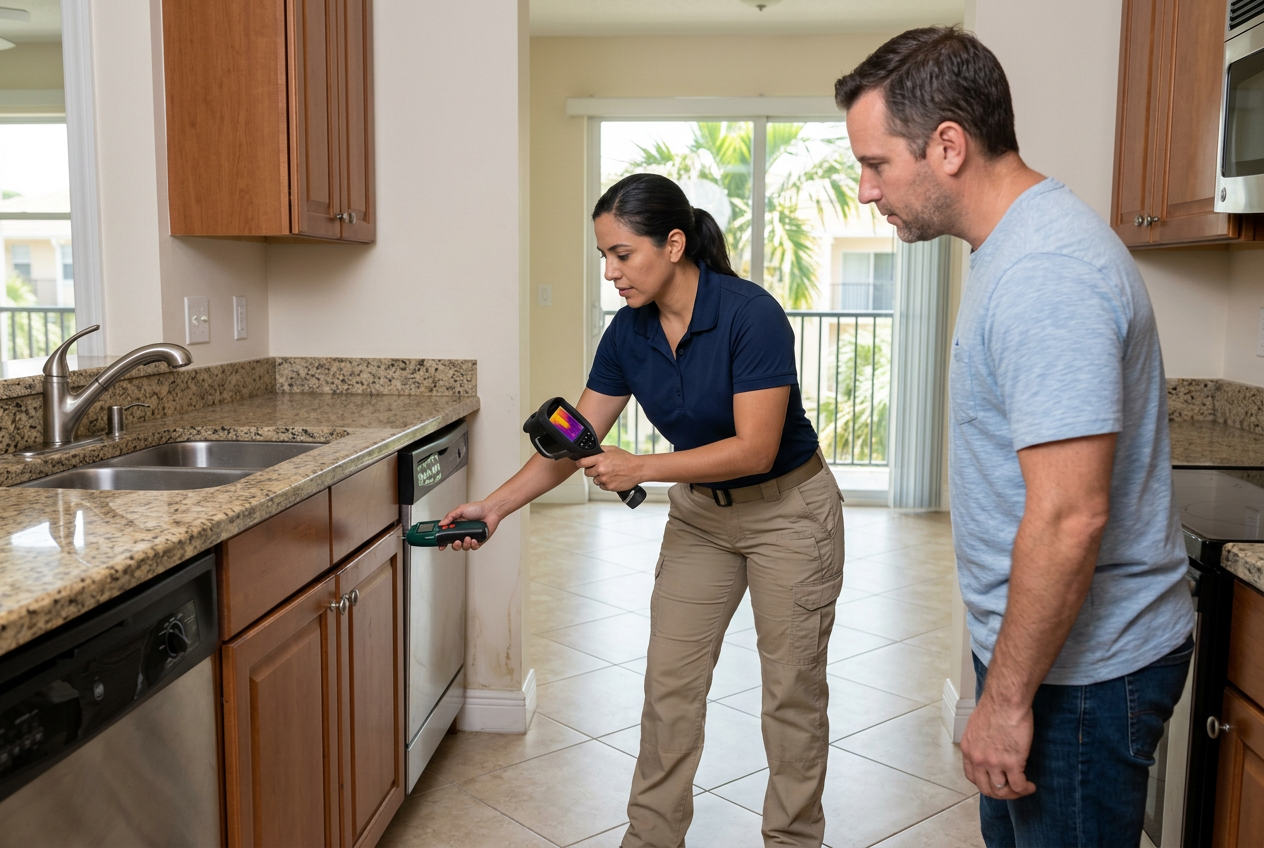
Depending on access and the circumstances, an inspector may review visible and accessible areas connected to the leak, look for signs of moisture or suspected mold growth, and use moisture-measuring tools. Thermal imaging may be used as part of a mold and moisture inspection to help identify temperature patterns that warrant closer evaluation. It does not see through walls or confirm mold, and readings may need to be checked with other methods.
Mold testing may be considered when it can help answer a specific question about the property. The inspector should explain what samples are proposed, what locations they represent, and what the results can and cannot tell you. Testing is not always necessary, and a sample from one location cannot establish conditions throughout an entire condo or building. An inspection also cannot identify every concealed condition if areas are inaccessible or destructive investigation is not authorized.
Results can provide information about observed conditions at the time of the visit, but they are not a guarantee that no mold exists now or could develop later. They do not determine the cause of a leak, certify that all repairs were properly completed, or diagnose health symptoms. If a report identifies concerns, ask what evidence supports the findings and what further evaluation may be appropriate. Remediation, plumbing repairs, and building access may involve separate professionals and decisions.
Plan the inspection around the purchase process
If you are considering an inspection, arrange it early enough to review the findings within your purchase timeline. Confirm that the inspector can access the affected areas, including relevant closets, cabinets, or ceilings, and ask whether the association needs to approve access to common areas or another unit. Share any leak records and point out the locations of prior repairs. A focused inspection is more useful when the inspector knows what happened and can evaluate the most relevant areas.
For buyers comparing reports or planning next steps, keep the questions specific: Is there evidence of current moisture? Are there visible conditions consistent with mold growth? What areas could not be assessed? Is sampling recommended, and why? Clear answers can help you discuss the findings with your real estate professional, the seller, or the association and decide what additional information you need.
Arrange an independent inspection in Delray Beach
A documented plumbing repair and dry, well-maintained affected areas may reduce uncertainty, but the decision to investigate further depends on the leak’s history and what you observe. When the records are incomplete, signs remain, or concealed areas are a concern, an independent assessment can add useful context before closing.
MoldXperts provides mold inspection, mold testing, indoor air quality testing, and thermal imaging as part of mold and moisture inspections in South Florida, including Delray Beach and Palm Beach County. To discuss a condo with a history of plumbing leaks, call (954) 464-4538 or visit moldxperts.com. MoldXperts does not provide mold remediation or mold removal services.




Leave a Reply