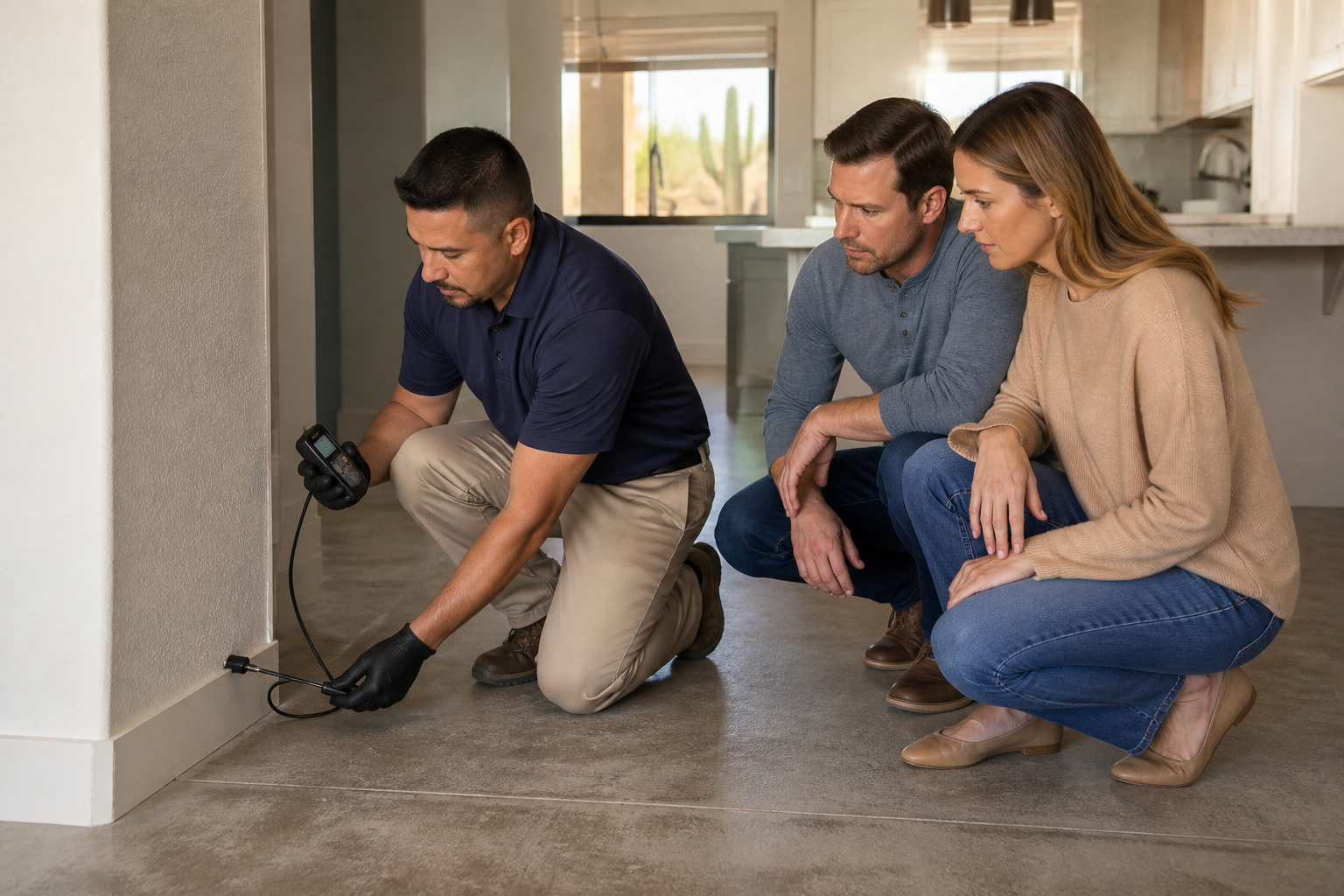
Before buying a home in Scottsdale, ask whether it has had roof leaks, plumbing failures, flooding, or other water damage, and how any affected areas were repaired. If you notice unexplained staining, a musty odor, or signs of past moisture, a mold inspection or testing may help clarify whether more investigation is appropriate—but no single visual check or test can guarantee that every hidden area is mold-free.
As part of your due diligence, request repair records and ask about the source of any water intrusion, what materials were affected, and whether the moisture problem was resolved. A general home inspection can identify visible concerns, while a focused mold inspection may be useful when there are specific signs or unanswered questions about moisture or possible mold growth.
Ask for details and documentation about past water damage, not just whether repairs were made. If signs of moisture remain, the history is unclear, or you want a closer look at a specific concern, consider discussing a mold inspection or testing before closing.
Questions to Ask About Water Damage and Repairs
Water damage does not always lead to mold, but persistent or recurring moisture can create conditions for growth. A seller’s answers can help you understand what happened and whether the source was addressed. Where possible, compare those answers with disclosures, inspection findings, invoices, and other available records.
- Has the home had a roof leak? Ask where it occurred, when it was repaired, and whether ceilings, insulation, or other materials were affected.
- Have there been plumbing leaks or appliance overflows? Ask about leaks under sinks, around bathrooms, near water heaters, or behind appliances—and whether repairs included drying or replacing affected materials.
- Has water entered the home from outside? Ask about water intrusion through windows, doors, walls, or other areas, and what was done to prevent it from happening again.
- Were any water-damaged materials removed or repaired? Ask which areas were addressed and whether there are records of the work.
- Has anyone noticed a recurring musty odor or visible staining? Ask whether the concern was investigated and what was found.
Answers such as “it was fixed” may not tell you whether the underlying moisture source was corrected. If the seller cannot provide details, that does not prove a mold problem exists, but it can be a reason to ask follow-up questions or seek a closer inspection.
Signs That May Call for a Closer Look
During a walkthrough, look for changes that could indicate current or past moisture. These are clues to investigate, not proof of mold. Some signs may also have causes unrelated to mold, so consider them alongside the home’s history and the findings of your inspector.
- Water stains, peeling paint, bubbling finishes, or warped flooring
- A persistent musty smell, especially near a bathroom, kitchen, laundry area, or closet
- Visible discoloration on walls, ceilings, or other building materials
- Areas that appear freshly painted or repaired where other signs suggest past water damage
- Moisture or dampness around plumbing fixtures, windows, or ceilings
Do not assume that a fresh coat of paint proves there is a hidden issue; it simply may be worth asking what prompted the work. Avoid peeling back materials or disturbing suspected mold yourself. Document what you can see and share the location with the appropriate inspector or testing professional.
How a Mold Inspection or Testing Can Help a Buyer
A mold inspection generally focuses on visible conditions, moisture concerns, and areas that may warrant further evaluation. Depending on the situation, a professional may recommend testing to help answer a specific question. Testing can provide information about samples collected from the property, but results should be interpreted alongside the inspection findings and the home’s moisture history.
Testing is not automatically necessary in every home purchase. It may make sense when there is visible suspected growth, a persistent unexplained odor, evidence of unresolved moisture, or a history of water damage that was not clearly documented. If there are no signs of moisture or mold and no unanswered concerns, you may decide that additional testing is not needed.
The U.S. Environmental Protection Agency explains that mold can grow where moisture is present and outlines ways to recognize a possible problem in its guide to identifying potential mold problems. The guide is educational information, not an assessment of any particular Scottsdale property.
If you are comparing mold testing services, look for a provider who can explain what an inspection or test can—and cannot—tell you. You can also view ALM Services’ directory listing for information about the company’s listed services.
What to Do Before You Close
Try to resolve moisture questions while you still have time to consider your options. These steps can help you make a more informed decision:
- Gather the home’s history. Ask for available records of leaks, water damage, repairs, and any prior mold inspection or testing.
- Note specific concerns. Record where you saw staining, odor, damaged finishes, or other signs, and share those observations with your home inspector.
- Ask whether further evaluation is appropriate. If concerns remain after a general inspection, discuss whether a focused mold inspection or testing could help address them.
- Clarify the source of moisture. If an active leak or other water intrusion is identified, ask how it will be corrected. Mold remediation, if needed, does not replace fixing the moisture source.
For a broader explanation of how moisture and mold relate, see the EPA’s guide to mold, moisture, and the home. For a Scottsdale buyer, the practical question is not only whether mold is visible today, but also whether water entered the home, what was done about it, and whether signs of moisture remain.
Frequently Asked Questions
Should I get a mold inspection before buying a home in Scottsdale, AZ?
It may be worth considering if you find visible suspected growth, notice a persistent musty odor, see signs of moisture, or cannot get clear answers about past water damage. A general home inspection and a mold-focused evaluation serve different purposes, so discuss the specific concern with your inspector.
Does a past water leak mean the home has mold?
No. A past leak does not by itself establish that mold is present. The important follow-up questions are whether the leak was repaired, whether affected materials were dried or replaced as appropriate, and whether moisture or signs of growth remain.
Can mold testing confirm that a home has no mold?
No test can guarantee that every part of a home is free of mold. Testing reflects the samples collected under particular conditions, so results should be considered with the inspection, moisture evidence, and property history.
What if the seller says water damage was repaired but has no records?
Ask for details about where the damage occurred, what caused it, and what repairs were completed. If important questions remain or you observe signs of moisture, consider further evaluation before closing and discuss the findings with your real estate professional.
Need Mold Testing in Scottsdale?
If you’re concerned about moisture or possible mold in a property you’re considering, ALM Services offers mold testing, mold inspection, and mold remediation to help you assess the situation and consider appropriate next steps.
ALM Services
Call: 602-257-8000





Leave a Reply